Transitioning as a Social Entrepreneur: Letting Go of Leadership
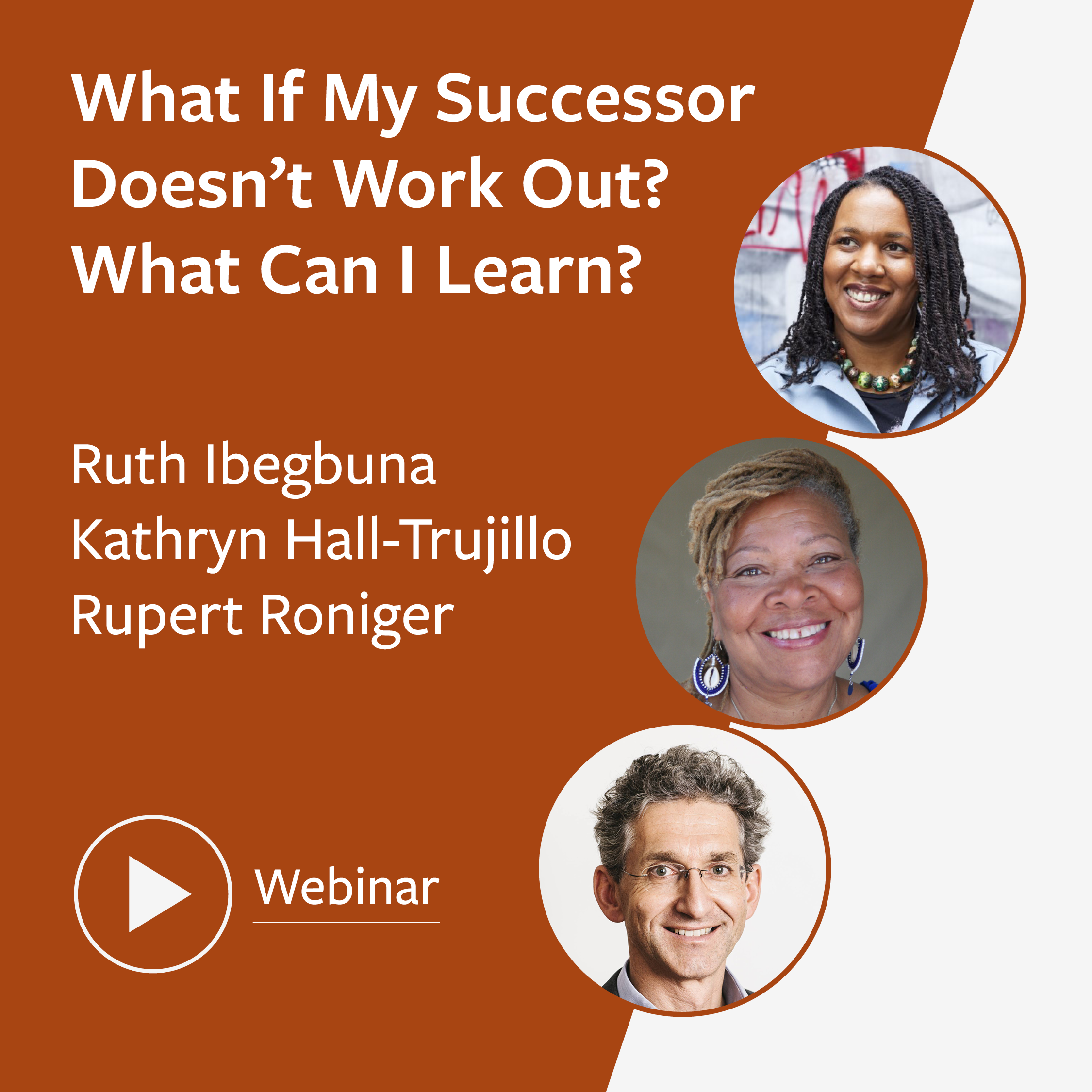
Inspired by the webinar: What if my successor doesn't work out? What can I learn? hosted by the Elders Council for Social Entrepreneurs
Navigating transitions is a complex, deeply personal process. For founders and leaders, their organisations are often an extension of themselves, born from their values, ideals, and passions. The question of when and how to step aside can be full of emotion, self-doubt, and practical concerns. Drawing from a conversation with Rupert Roniger (Founder of Light for the World), Kathryn Hall-Trujillo (Founder of The Birthing Project USA), and Ruth Ibegbuna (Founder of Reclaim and Rekindle School), this article explores practical lessons for social entrepreneurs facing these pivotal moments.
1. Understanding when it’s time to let go
Many social entrepreneurs struggle with the decision to leave because of the profound emotional attachment to their work. During the webinar Ruth and Rupert shared that their identities had become too intertwined with their organisation’s success, both in the eyes of themselves and some of their teams. A crucial indicator is the diminishing alignment between your values and the needs of the organisation. This misalignment could show up in subtle ways - like feeling disconnected from new initiatives or noticing a gap between your original vision and the current trajectory of the organisation.
One of the most practical ways to evaluate whether it's time to step aside is through reflection on whether you’re adding strategic value. Are you still the one to take the organisation into its next phase of growth? Sometimes, leaders hold on because they fear the unknown or worry about losing relevance. Instead, take time to listen to both your team and yourself. Ruth explained that if you notice growing gaps in alignment or energy, these might be signs that your departure could breathe new life into the organisation.
Ask yourself if the organisation is growing because of you or in spite of you. Discuss openly with trusted advisors to get outside perspectives that help clarify your role.
2. Balancing emotional investment with organisational independence
It’s important to foster a culture where the organisation can operate independently of you. This ensures that when you do step back, it can continue to grow and thrive without relying on your constant presence.
Founders often inject so much of their own passion, energy, and personality into their organisations that it can become difficult to distinguish where the leader ends and the organisation begins - both Ruth and Rupert recognised this about themselves and found it to be an indicator that it was time to leave. While this can be a powerful driver for growth in the early stages, it can also hinder long-term sustainability. When the leader’s personality dominates, the risk is that the organisation may struggle to function without them.
Although, while you cannot and should not remove the emotional and personal investment that led you to create the organisation in the first place, it’s crucial to begin shifting your approach from a founder-centric model to one that empowers others to lead. Delegating responsibilities, decision-making, and empowering team members to take ownership of the mission are all steps towards creating a self-sufficient organisation. On reflection, Ruth said that she would have spent more time on the act of handing over into safe hands in her transition process. Whereas, Rupert felt he wanted to impart his wisdom only until the successor was in charge, and then he felt it important to step back.
Rupert, Kathryn, and Ruth found comfort in the experience or idea of a process that allowed their successors to develop their own voice and style.
3. Passing on values, not methods
Focus on passing down the underlying values and mission that have driven the organisation, rather than your specific ways of working. Successors must have the freedom to adapt and evolve while staying true to core principles.
One of the greatest fears for leaders stepping aside is that their successor won’t run the organisation as they did. This fear is often rooted in the assumption that the methods and systems you put in place are inseparable from the success of the mission. In reality, the strength of a successful transition lies in passing down a strong sense of the organisation’s values.
Successors need space to bring in their own perspective. You can try to guide them by focusing on the ‘why’ behind the organisation’s mission, perhaps not the ‘how’. This allows the next generation of leadership to adapt to new challenges while remaining grounded in the values that inspired the organisation’s creation.
4. Embrace the emotional complexity of letting go
Allow yourself the emotional space to grieve, reflect, and adapt during the transition. It’s not just about handing over the reins but about redefining your own identity outside of the organisation.
Letting go of a role that has been central to your life’s work requires time and emotional processing. You may need to redefine who you are outside of the organisation and rediscover passions or projects that energise you. Leaders often pour so much of themselves into their organisations that their wellbeing takes a back seat.
5. Cultivate and trust your successor
Choosing your successor wisely is important, but trusting them is too. Empower them not just with authority but with the confidence to lead in their own way.
Choosing a successor is often one of the most stressful aspects of transitions. The fear that the wrong person could undo years of work is valid. Kathryn noted that it’s important to recognise that no one will lead exactly as you do, and that’s okay. Part of the beauty of transitions is that they bring fresh perspectives, new energy, and innovations that might not have occurred under your leadership. Your role in this process is to provide guidance where necessary, instil confidence in your successor, and then trust them to take the organisation forward.
6. Prepare for organisational resistance and embrace change
Expect and address resistance to change, both from within the organisation and from yourself. Change is difficult, but a prepared transition can alleviate the anxiety associated with leadership handovers. As a founder or long-serving leader, you may face resistance from team members and board members who fear that your departure will lead to the demise of the organisation. However, this anxiety can be managed through transparent communication, careful planning, and inclusive decision making.
Holding regular, transparent discussions with your team throughout the transition to address their concerns openly, and assure them that the organisation has a solid plan for sustainability post-transition is something that Rupert found key in his process.
7. Create a legacy of values, not control
Understand that your legacy is not about holding on but about ensuring the continuation of values and mission. As social entrepreneurs, it’s easy to become protective of what you’ve built, but holding on too tightly can prevent the organisation from evolving freely. Kathryn described this as being a “Queen Mother”, echoing that she’ll always watch over her organisation but will allow her successor and the new generation of leaders to adapt to modern ways.
Legacy is about creating something that outlives your leadership. Your role is to make sure the values that founded the organisation remain strong, even as the methods and strategies evolve.
It’s important to solidify your organisation’s core values and ensure that systems are in place to uphold them, while letting go of day-to-day decisions.
Transitioning out of leadership is never easy, but it is a necessary part of the organisation’s and your own journey. By knowing when to step back, ensuring the organisation can thrive independently, and creating a legacy of values rather than methods, leaders can pave the way for a sustainable and impactful future. The process requires emotional resilience, trust in your team, and the ability to see your own identity beyond the organisation.
Author: Melyka “Benn” Bennett
Editor: Katelynne Kirk and Chris Underhill